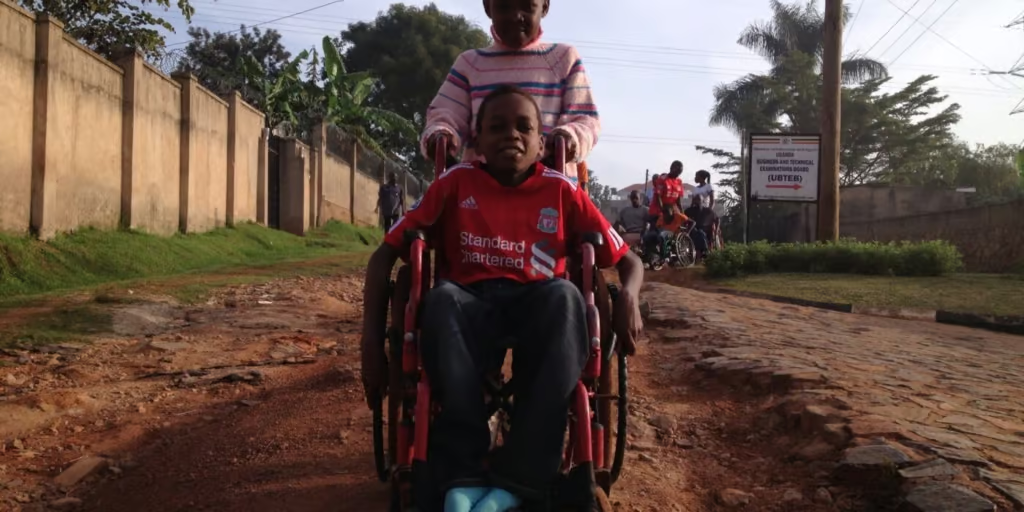
Using creative participatory approaches for inclusive climate resilient transport in Africa: Guidelines for Practitioners
Published: {acf_publication_date: F Y}
Main topic: Climate change, Adaptation, Access and infrastructure
Study countrie(s): Africa, Sub-Saharan Africa
Written by: Amanda Ngabirano, Cassilde Muhoza, Daniel Mwamba, Wasike Yusuf Arby, Howard Cambridge, Romanus Otieno Opiyo, Steve Cinderby, Gary Haq
Published by: University of York
Study type: Research report
Active mobility such as walking and cycling plays a vital role in economic and social prosperity in African cities, connecting people, goods and places. Yet every day, citizens risk their lives because of the low priority given to non-motorised transport (NMT) and the lack of investment in safe transport infrastructure.
It is low-income disadvantaged groups such as the old, disabled, young and women who suffer the most from poor transport systems that do not meet their needs. In the absence of adequate sidewalks, cycle paths and public transport, citizens in African cities are forced to use motorised vehicles (for example, paratransit, cars, minibuses and motorbike taxis) whenever they can afford to do so.
This has disastrous impacts on air quality, greenhouse gas (GHG) emissions, road safety, traffic congestion, overall economic efficiency and quality of life. Climate change is expected to compound these transport challenges with impacts on infrastructure, vehicles and mobility. An opportunity exists to make transport not only more inclusive but also resilient to climate impacts.
PURPOSE
The primary aim of this guidance is to provide a set of concepts and tools for more inclusive and climate-resilient transport in Africa. It acts as a reference document to assist transport decision-makers, transport planners and representatives of disadvantaged groups to understand the application and use of various creative participatory tools.
The document is divided into three sections.
– Section 1 introduces key issues relevant to inclusive and climate resilient transport in Africa.
– Section 2 outlines four types of creative participatory tools that can be used to engage low-income, disadvantaged groups in transport policymaking and planning processes, to help ensure their voices are heard.
The final section provides a summary of additional factors to consider when applying these approaches and suggestions on how to overcome common challenges.
AUDIENCE
This guidance has been produced for two key audiences:
– African transport planners and decision-makers who are responsible for transport policy, planning and infrastructure development.
– Representatives of disadvantaged groups who can engage in the co-design, development, and delivery of transport policies in African cities.
The tools described require limited human and financial resources to implement. However, the application of the tools will often benefit from the use of experienced facilitators. The guidance is not intended to be a comprehensive reference to participatory engagement but rather highlights selected, tested tools that show the greatest potential for widening inclusion in transport planning in Africa.