T-TRIID Final Report – Monitoring devices and information transmission for safer urban transport
Published: {acf_publication_date: F Y}
Main topic: Access and infrastructure, Public transport
Study countrie(s): Kenya
Written by: Boris Maguire, David Schönholzer, Eddy Nguli, Erin Kelley, Gregory Lane
Published by: Echo Mobile, University of California
Study type: Research report
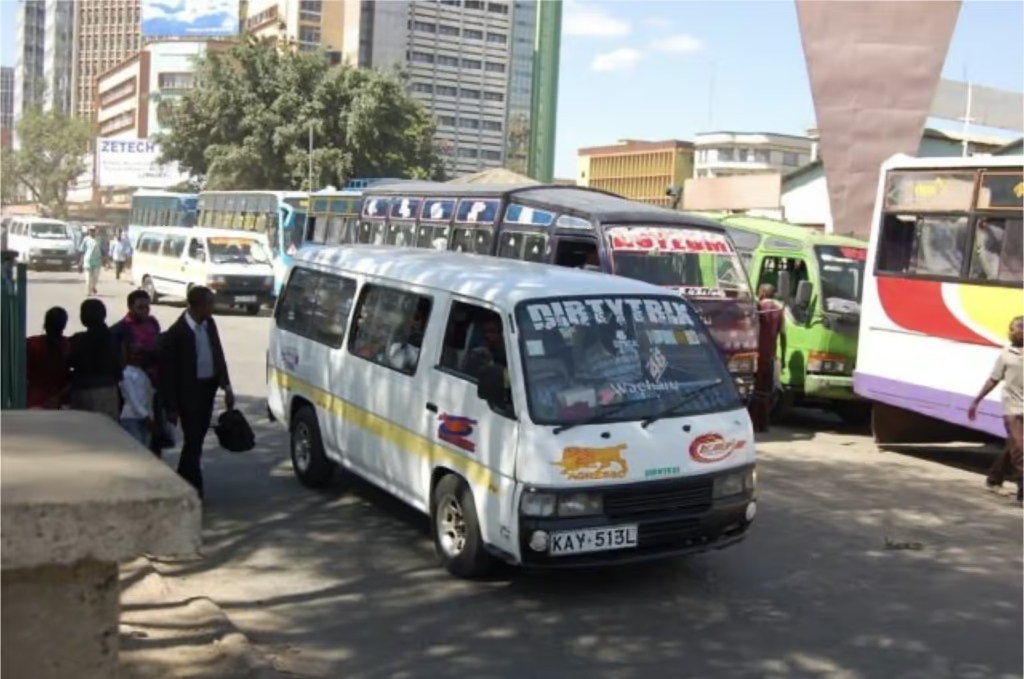
African cities have experienced unprecedented growth in recent years. As the proportion of urban dwellers continues to grow, challenges surrounding infrastructure, and service provision more broadly have started to emerge. In this research we focus on a problem where the challenges of urban growth are particularly salient: the efficiency and safety of public transportation systems in SubSaharan Africa. Accidents in this industry are frequent and deadly. Bus drivers face incentives to drive recklessly in order to increase their take-home pay, which endangers passengers on board, as well as other vehicles on the road. These dangerous driving conditions disproportionately affect the poor, who rely heavily on public transportation to get to work. The goal of our work is to develop a system for tracking unsafe driving, and convey this information to passengers, who are the primarily stakeholders in the industry.
To this end, The University of California, Berkeley and Echo Mobile developed our own GPS tracking device that we designed specifically for the Kenyan minibus industry, which we fit to 60 mediumrange minibuses traveling from Nairobi to Kisumu. This required forming close connections with companies operating on the route. We then monitored the safety performance of the vehicles each month and awarded a Top Safety Performer badge to the bus company with the best safety performance that particular month. We then informed hundreds of passengers about these safety ratings, and subsidized dozens of passengers to take safer rides. We did so by intercepting passengers as they entered the street and providing them with pamphlets about safe driving in general, or pamphlets that displaced the safety certificates we generated. Our research design allows us to determine a) the extent to which passengers value safety, b) whether their decisions about which bus to take are affected by information about safe driving.
Overall, we find that passengers react strongly to a small (10%) subsidy for the safest bus company. However, while money can move travelers towards safer choices, we find that the effect of information is much more complex: instead of taking the information at face value, travelers may reinterpret it in terms of persuasion attempts of competing public transport companies, especially when they are offered a subsidy for the company advertised as safe.
These finding sheds light on the importance of creating a trustworthy information environment for public information campaigns to succeed. We aim to address this in future work, by developing a mobile app that provides information about buses that have our GPS trackers (which we would develop in partnership with various partners). In general, individuals have more faith in apps than in solicitors on the street and the app will invite passengers to contribute information about their own experiences on particular buses, which will add legitimacy to the product.