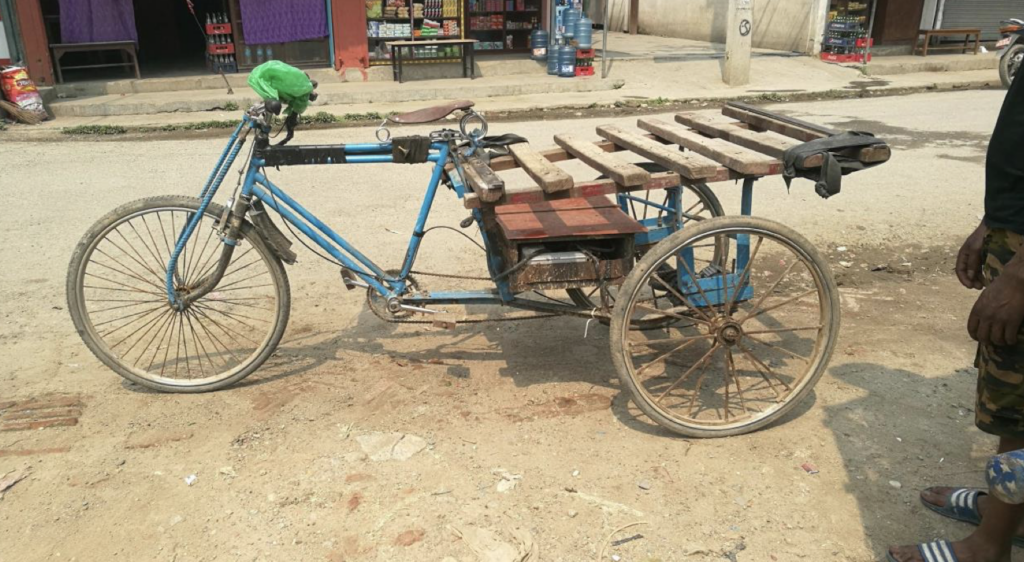
T-TRIID Final Report – Feasibility study of modification of pedal driven rickshaw to electrically assisted rickshaw
Published: May 2019
Main topic: Climate change
Study countrie(s): Nepal
Written by: Anita Rijal, Bahar Kumar, Kesav Panthi, Padmakshi Rana
Published by: Nepal Communitere
Study type: Research report
Pedal rickshaw drivers in Kathmandu, whether they own or lease their rickshaw, rely on it as their main source of income despite the fact that it offers little financial security. Earnings for rickshaw drivers can vary depending on demand from customers, affecting their daily working hours and subsequent earnings. Furthermore, operating pedal rickshaws is physically demanding, which requires rickshaw drivers to be in good physical health to work enough hours to earn well. Any health issues that compromise physical well-being have a direct impact on daily earnings.
The results of Environmental Performance Index (EPI) mentioned that Nepal’s air quality is worst among the 180 surveyed countries. Nationally Determined Contribution for Nepal shows that by 2050, Nepal will decrease its dependence on fossil fuel in the transport sector by 50% through mass public transport, while promoting energy efficient and electric vehicles.
Considering these facts, electrically assisted rickshaws, although will not able to bring radical change in the national transportation system, will contribute in Nepal’s goal to develop electric vehicles. Smaller vehicles such as electrically assisted rickshaw can serve the community to provide benefits to the rickshaw drivers and customers without causing harm to the environment.
The solution this study proposes is to modify six pedal rickshaws in Kathmandu using an electric assist system to reduce the physical strain and hardship of operating rickshaws while also improving the earning capacity of the drivers. The study has the potential to directly impact those at the bottom of the pyramid – poorest socio-economic group.
Despite the mechanical, behavioural, policy and supply chain challenges during the study, observations and analysis shows that low cost modification of pedal rickshaws into electrically assisted rickshaws can reduce physical strain and health problems or rickshaw drivers. In addition, they shorten trip duration and so make more trips possible in a working day, or potentially increase leisure time for the driver. Findings further reflect that although actual income did not increase with use of modified rickshaws, there were improvements in health outcomes and factors that directly affect income earning potential.
These factors collectively have a positive impact on the drivers’ income earning capacity, health and wellbeing. The product needs to incorporate new changes for efficient operation otherwise the issues of repair and maintenance will add to the economic burden of the rickshaw drivers.
Electric assisted system was selected because of the low operational costs (a few electrical units to charge), zero emission during operation and a small capital investment (modification cost in Nepali Rs 80,000, USD 717.101 ).
This report shows the benefits of using electrically assisted rickshaws over pedal driven rickshaws. It can be a basis for drafting new policies related to the modification of the pedal driven rickshaws.