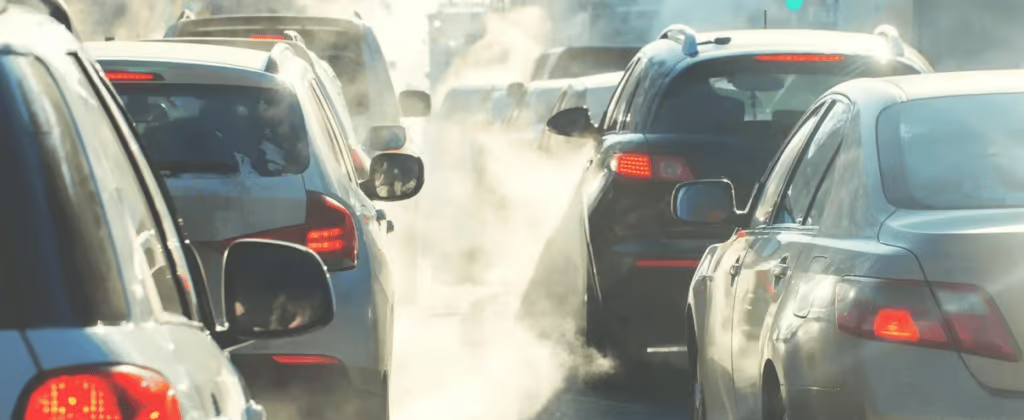
Beyond the Tailpipe: Asia’s Evolving Transport Emissions Challenge
Published: {acf_publication_date: F Y}
Main topic: Mitigation, Policy and planning, Crisis response, Public transport, Urban Transport
Study countrie(s): Asia
Written by: Sudhir Gota, Alvin Mejia, Mel Eden, Adwait Limaye, Benjamin Soco, Aaron Salang
Published by: Asian Transport Observatory
Transport air pollution remains one of the most pressing environmental and public health challenges in Asia and the Pacific. Rapid economic growth, expanding transport networks, and rising vehicle ownership have transformed mobility across the region—but they have also intensified exposure to harmful pollutants that affect millions of people every day.
Beyond the Tailpipe: Asia’s Evolving Transport Emissions Challenge examines the changing landscape of transport-related air pollution in Asia and the Pacific. The report looks beyond conventional tailpipe emissions to explore emerging sources of pollution, including non-exhaust emissions from tire and brake wear, the growing role of domestic shipping, and the implications of the region’s accelerating electric mobility transition.
Drawing on data compiled by the Asian Transport Observatory, the report highlights both progress and persistent gaps. While stricter vehicle emission standards and improved fuel quality have helped reduce certain pollutants in several economies, challenges remain unevenly distributed across the region. Heavy-duty diesel vehicles continue to generate a disproportionate share of harmful emissions, public transport access remains limited for many urban residents, and rapidly growing transport modes such as domestic shipping remain largely unregulated in terms of air pollution.
The report underscores a central message: tackling transport emissions requires moving beyond the tailpipe. Policies must address the full system—from vehicle technology and fuel quality to public transport expansion, freight logistics, and emerging sources of particulate pollution. By identifying key trends, policy innovations, and critical knowledge gaps, this report provides evidence to support more effective strategies for cleaner and healthier transport systems across Asia and the Pacific.