Aviation Contrail Mitigation
Published: September 2026
Main topic: Climate change, Mitigation, Adaptation
Written by: A Kamath, C Broadwood, R Gardner, W Mohamed
Study type: Technical Note
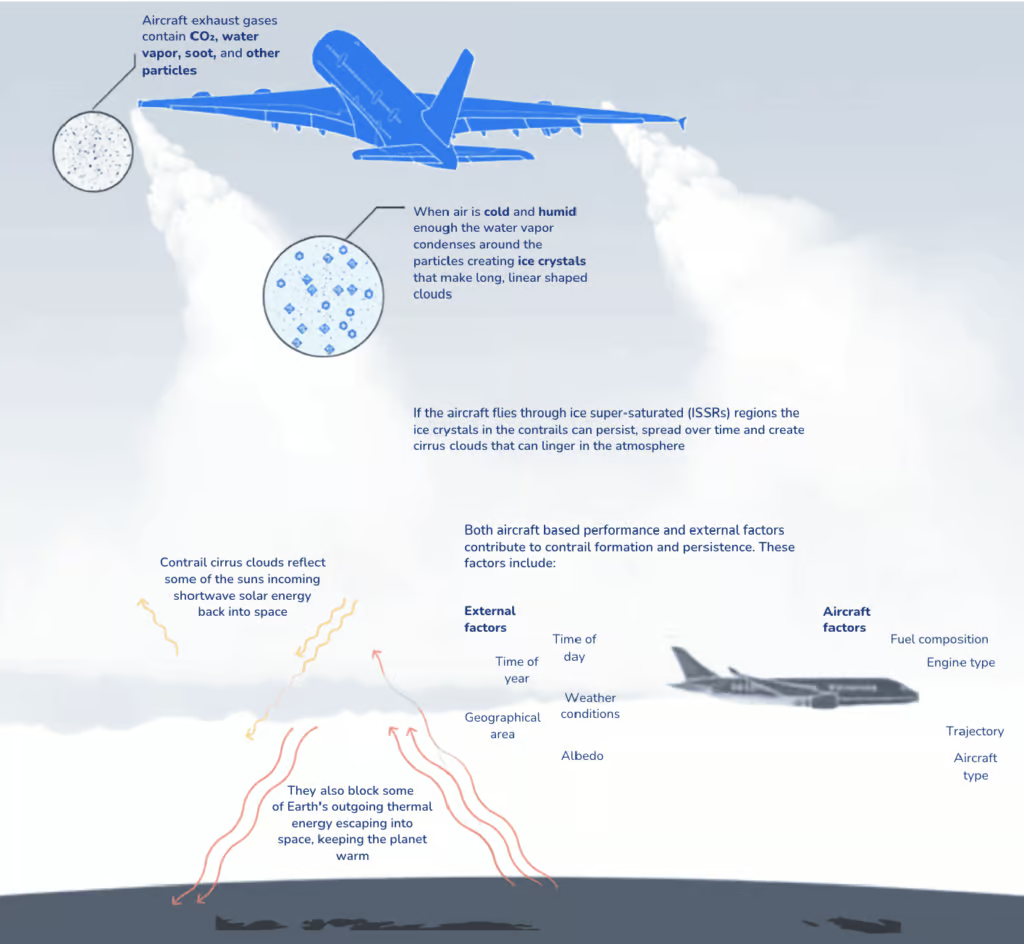
Contrails, the white trails behind aircraft, do more than streak the sky. When planes fly through cold, humid air, some contrails linger and spread into cirrus clouds that trap heat and add to global warming. Only a small share of flights may cause most of this effect, so avoiding the right contrails could bring large climate gains at low cost.
This new RIDE evidence review, prepared by TRL for the UK’s FCDO, looks at where the science stands. Researchers can now predict where persistent contrails are likely to form. Knowing which ones actually warm the planet, and proving that avoiding them works, is much harder.
The review sets out the next challenges: checking climate benefits independently, testing mitigation at operational scale, and building international rules to apply it. It also shows where new investment can add the most value, including testing whether approaches developed in Europe and North America work in other regions.
Contrail mitigation won’t replace wider aviation decarbonisation, but it could be an important part of the mix.